
1776: A Precursor
by Diana Loski
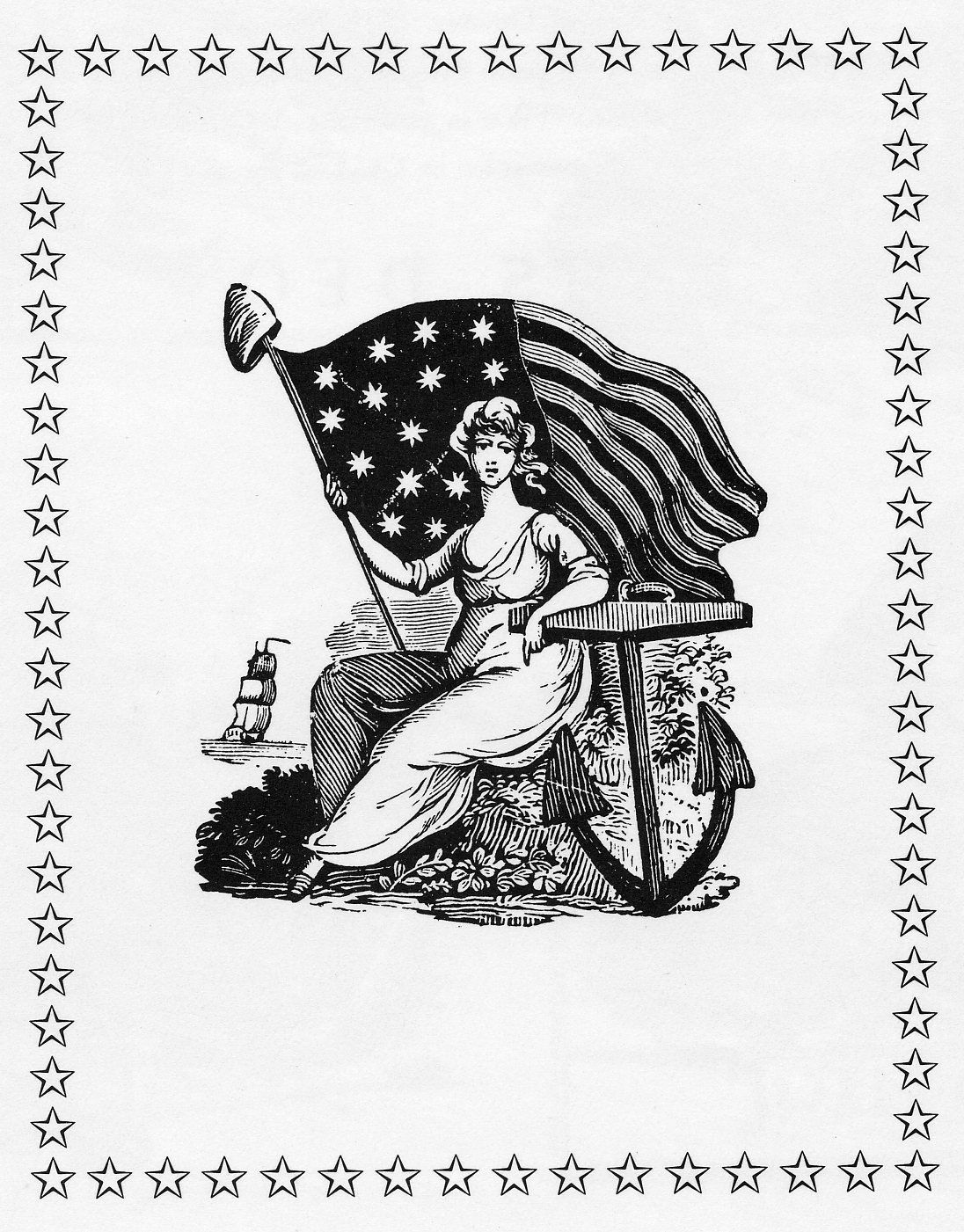
The year 2026 marks the semiquincentennial anniversary of the founding of the United States. The American colonists had suffered many indignities under King George III of Great Britain, and the festering ill will moved many to press for independence, which was made official on July 4, 1776 with the monumental Declaration of Independence.
Here are some of the events that fanned the flames of discontent, providing the precursory path that led to revolution, expressly penned by Thomas Paine in this same year as “these are the times that try men’s souls”:
Colonists as Second Class Citizens: Although many colonists served in the British military in the French and Indian War (called the Seven Years’ War by the British), none of them, no matter how capable, were ever promoted beyond the rank of Colonel. One of these men was George Washington, who had proved fearless in battle and a natural leader of men. In addition to their banishment to the lower ranks in the army, colonists could not vote or possess the rights of other citizens from Great Britain.
The Boston Massacre: On March 5, 1770, a group of discontented young colonists confronted British troops that had recently been deployed in Boston. The young men began to taunt the British soldiers, and the confrontation soon escalated as the colonists began to throw snowballs and rocks at the troops. The soldiers responded by shooting into the crowd. Five colonists were killed and several more were wounded. The colonists soon called the incident The Boston Massacre. The British called it “The Incident on King Street”.
The Boston Tea Party: King George III resolved to show his power as absolute monarch over the Colonies for the next several years. The British governing body continued to treat the colonists as second-class citizens, unable to vote, unable to have a voice in their own lives. The Colonists were beholden to Great Britain for their subsistence, unable to trade with other nations; they were forced to buy only from Britain with large taxes imposed for their commodities. In December 1773, a large shipment of tea came to Boston Harbor, and the colonists refused to take it. The British officials left the ship in the harbor, insisting that the colonists take the tea and pay a hefty tax on it.
A group of protestors, known as the Sons of Liberty, had been actively protesting the British authorities since the 1760s. Their members included Samuel Adams, John Hancock, and Paul Revere. After the Boston Massacre in 1770, they won more members to their society, continually protesting against the harsh practices of King George III and his officials. Determined not to accept the tea from England, one evening some members of the group disguised themselves, came aboard the ship and dumped the tea into the harbor.
The Intolerable Acts: With the new year in 1774, the governing British were incensed at the ruined tea thrown into Boston Harbor. Determined to punish the colonists and exert all control over them, the British passed punitory laws in retaliation. They became known as the Intolerable Acts, lasting from 1774 onward. These acts included laws that the British could arrest and move trials of colonists for any reason; British officers could force colonists to provide shelter and permanent quarters in American homes for their military; they blocked Boston Harbor with their naval forces – forbidding any trade with any other nation besides Great Britain; they confiscated any weapons of the colonists whenever they deemed it necessary, and they burdened the populace with even greater taxes. Even though Massachusetts had been the place of the rebellious actions, the Intolerable Acts were placed on all thirteen colonies.
Paul Revere’s Ride: By 1775, the Intolerable Acts had incensed the colonists to such a degree that armed conflicts began to take place. The first battle of the American Revolution, even before war became official, was the Battle of Lexington & Concord in Massachusetts. A Boston silversmith named Paul Revere (1735-1818) was a member of the Sons of Liberty. Knowing that a battle was imminent, Revere learned from his fellow compatriots that the British patrols were coming by sea to seize the munitions at Concord and arrest members of the Sons of Liberty. When Revere saw that two lanterns were lit in Boston’s Old North Church tower, he and two other members of the society rode through the night to Concord, alerting the militia. The clash between the colonists and British military resulted in the Battle of Lexington and Concord the next day.
The Battle of Lexington and Concord: On April 19, 1775, the opening engagement on American soil occurred at Lexington, Massachusetts. The battle resulted in casualties, with deaths incurred on both sides of the conflict. The armed fight was known to history as “the shot heard around the world”, and the majority of colonists realized that war was now the only option for them. Many colonists did not want a war, and had hoped to make peace with King George III and the country they had considered their anchor. The battle proved that wish to be a fruitless one. The battle was considered a victory for the Colonies.
George Washington Chosen as Commander: On May 10, 1775, the 2nd Continental Congress met in Philadelphia to discuss what had become a veritable war with Great Britain. During their meetings, the delegates named George Washington as Commander-in-Chief of the Continental Army. Washington, who was arrayed in his Virginia militia uniform at the meeting, was an easy choice because of his famed military prowess during the French and Indian War. He was already a hero in the eyes of the colonists. Additionally, Washington was a Virginian – not from New England; the delegates hoped his commission would unite the southern colonists to the cause. Washington had a great task before him: to take a group of untried civilian troops and convert them into a unified, toughened, professional army.
The Battle of Bunker Hill: Two months later, the British retaliated on a higher hill on the peninsula near the city of Boston. Both Breed’s Hill and Bunker Hill are closely situated, and many historians insist (and correctly) that it should be the Battle of Breed’s Hill. This battle was won by the British, though they took heavy casualties. The fight again showed the resolve of the colonists – there would be no way back to the way things were before.
The Battle of Quebec: On New Year’s Eve 1775, a unit of several thousand colonists, led by General Montgomery and Colonel Benedict Arnold, attacked the fortified city of Quebec after a siege of three weeks. Attacking at night and during a snowstorm, the American commanders hoped to take the city by surprise. The townspeople were soon alerted and stood ready to defend themselves. The wet snow soon rendered the weapons ineffective for the attackers. Within hours, General Montgomery was killed and Colonel Arnold was wounded, leaving the British victorious. Nearly four thousand American soldiers, already malnourished and weakened, were taken prisoner.
Norfolk Set Ablaze: On New Year’s Day in 1776, the British Navy set fire to Norfolk, Virginia. This brought the bulk of the Virginians into the fight. George Washington, however, was already in the field, leading troops against the British.
Thomas Paine and Common Sense: A few days after the fire in Norfolk, the American writer Thomas Paine published his pamphlet Common Sense. In it, he argued that all the ills that prevailed in the colonies were fomented by the British, and the yoke that Britain placed on the colonists must be removed. He persuaded many of the undecided that liberty was the right of every man. The publication swayed many to the side of independence, and the 47-page pamphlet is still in print today.
The Siege of Boston: Starting just after the Battles of Lexington and Concord, Continental troops, led by George Washington, laid siege to the city of Boston. Their intent was to forbid the British garrison in Boston to move inward by land to combat the colonists. By early 1776, young Henry Knox, a citizen of Boston and patriot for the revolution who would become the chief artillery officer for the Americans. He aided Washington by bringing artillery from Fort Ticonderoga in upstate New York. In March 1776, nearly a year after the siege began, the Continental troops succeeded and the British troops withdrew from Boston – by ship. George Washington, snubbed years earlier by Great Britain from progressing in their army, now showed them their immense mistake.
The meeting of the Continental Congress in the late spring and early summer of 1776 was not the beginning of the war. It was the inevitable outcome of long-brewing hostilities, with basic human rights at the core. It did, however, provide the promise of a new beginning.
Sources: Bradley, Michael R. It Happened in the Revolutionary War. Guilford, CT: Two Dot Publishing, 2003. Grun, Bernard. The Timetables of History. New York: Simon & Schuster, 1991. Irving, Washington. George Washington: A Biography. Abridged and edited by Charles Neider. New York: Da Capo Press, 1994. Yoder, Carolyn P. George Washington: The Writer: A Treasury of Letters, Diaries, and Public Documents. Honesdale, PA: Boyds Mills Press, 2003. The Quote at the beginning of the article is by Thomas Paine, and written in his pamphlet Common Sense.
