
The Year 1926
by Diana Loski
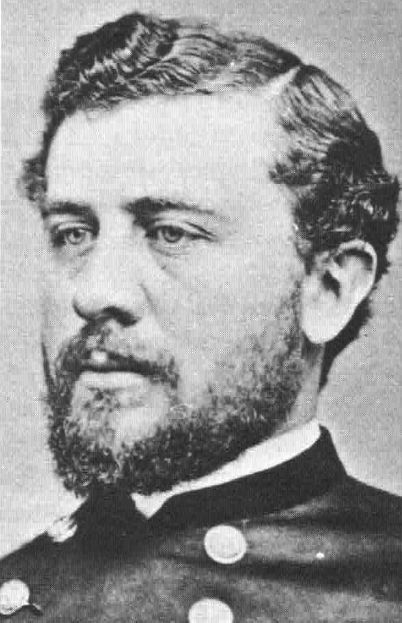
John Brooke (1838-1926)
(Library of Congress)
One hundred years ago, New Year’s Day came in on a Friday.
The year 1926 was a prosperous year for the United States, whose population totaled 115 million. Calvin Coolidge continued to serve his second term as President of the United States, with Charles Dawes, the son of renowned Gettysburg veteran Rufus Dawes, as Vice President. Our nation signed a treaty with Panama for the recently completed Panama Canal. Bobby Jones was the first American golfer to win the British Open. United Airlines was established, and is an airline that still functions today.1
In 1926 the records of Duke Ellington first appeared. Kodak produced the first 16-millimeter movie film. Movie idol Rudolph Valentino appeared in his final film, The Son of the Sheik. Plans to build the George Washington Bridge over the Hudson River in New York were made into blueprints.2
Throughout the rest of the world there was widespread political unrest. The governments of Poland, Portugal, and Lithuania were all overthrown. In both Portugal and Poland, dictatorships replaced republics as a result of military coups which prevailed for many years. While the Spanish Civil War was still years away, their future dictator Francisco Franco was promoted to the rank of brigadier general in that nation’s army – the youngest to attain that rank in Spain, at the age of 33. Mussolini had grasped power in Italy, and Hitler was gaining power in Germany – sowing the seeds that would erupt in war in the coming years. That same year, fascist youth organizations were formed in both Italy and Germany. In 1926, Wilhelm Marx, the Chancellor of Germany at the time, agreed to a treaty with the USSR, pledging neutrality between both countries. It was an agreement that Hitler would later break.3
The miniscule nation of Lebanon, in the Middle East, became a democratic republic in 1926.4
That same year Germany was admitted to the League of Nations, an organization founded in 1920 after World War I. It was established by a multitude of countries, with Woodrow Wilson, the former American President as a major contributor. The goal of the League of Nations was to prevent war and promote peace throughout the world. The organization was dissolved in 1946 at the end of World War II, as it had failed in its quest to prevent war.5
In Great Britain, coal miners erupted in a nine-day strike for better conditions. In London, the first traffic light was placed at Piccadilly Circus. Another modern breakthrough occurred in London that same year. The first Trans-Atlantic telephone call was made from London to New York City.6
In 1926, Ernest Hemingway published The Sun Also Rises. Mary Poppins by P.L. Travers was published in London, as was Winnie the Pooh by A.A. Milne. Crime novelist Agatha Christie made headlines that year by disappearing mysteriously for eleven days. She was found in a hotel in Harrogate, near York in the north of England; to this day, her disappearance and resurgence are still a bit of a mystery.7
In Japan, the twenty-five-year-old Hirohito became emperor of Japan at the death of his father.
In Gettysburg, the Lutheran Theological Seminary, the first of its kind in North America, celebrated its centennial year.
Many famous people were born in the year 1926. Among them were the future Queen Elizabeth II, the movie idol Marilyn Monroe, future dictator of Cuba Fidel Castro, and jazz musician Miles Davis. Equally famous were those who died that same year. Some of them included Gettysburg’s own native son and baseball legend Eddie Plank, Hollywood idol Rudolph Valentino, magician Harry Houdini, French impressionist artist Claude Monet, General John Brooke – a veteran of the Battle of Gettysburg, at the age of 88 – and Robert Todd Lincoln, the only surviving son of Abraham Lincoln. Robert Lincoln died suddenly at his home in Vermont, just days before his 83rd birthday. He is the only one of Lincoln’s sons not buried in the Lincoln family tomb in Springfield, Illinois. He is instead buried on a hillside below the former Lee mansion in Arlington National Cemetery. His wife, the former Mary Harlan, who died in 1937, is also buried beside him as Mary Lincoln, her married name. Passersby often confuse her grave with that of Abraham Lincoln’s wife, the former Mary Todd. She is buried with her husband in Springfield, Illinois.8
Just a month after the passing of Robert Lincoln, on September 11, 1926 the worst disaster ever to hit Miami, Florida took place with a terrible and sudden hurricane. Nearly four hundred perished in the storm, and nearly one hundred million dollars in damage occurred – a significant sum for a century ago. The hurricane also caused damage in the Bahamas and along the Gulf Coast – an issue that still plagues North America in modern times.9
That same year a young army officer was hurriedly completing his one-year courses at Fort Leavenworth for officer training. Dwight D. Eisenhower would graduate at the top of his class the following year. After spending several years in Panama with General Fox Conner, Ike wrote to the general asking how he could best prepare for the courses. The general replied, “You may not know it but because of your three years’ work in Panama, you are far better trained and ready for Leavenworth than anybody I know.”10
It seems that the stars were aligning for him to prepare against a dark future, one through which Ike would lead the world back to peace and prosperity – if only for a time.
Sources: Eisenhower, Dwight D. At Ease: Stories I Tell to Friends. National Park Service: Acorn Press, 1967. Grant, Neil. Kings & Queens. Glasgow: Harper Collins, UK, 2004. Grun, Bernard. The Timetables of History. New York: Simon & Schuster, 1991. Warner, Ezra J. Generals in Blue: Lives of the Union Commanders. Baton Rouge & London: Louisiana State University Press, 1964. Whitney, David C. and Robin Vaughn Whitney. The American Presidents. New York: Doubleday, Inc., 1993. Additional Miami hurricane information obtained from Googlesearch.com+Miami+hurricane+1926.
End Notes:
1. Whitney, p. 250. Grun, p. 490.
2. Grun, p. 491.
3. Ibid.
4. Ibid.
5. Grant, p. 230. Grun, p. 490. Whitney, p. 237.
6. Grun, p. 490.
7. Ibid.
8. Grant, p. 230. Warner, pp. 46-47. Grun, pp. 490-491.
9. Googlesearch.com+Miami+hurricane+1926.
10. Eisenhower, p. 201. He would graduate at the top of his class.
